Putting Resilient Forests planning in practice
The Resilient Forests project was established in 2023 to trial new approaches to climate adaptation planning, with the foothill forests of the Otways selected as a pilot landscape.
Phase 2 (2024/25) has consolidated and extended this work across five interconnected workstreams — Adaptation Pathways, Biocultural Landscapes, Research & Monitoring, Stakeholder Engagement, and Leadership & Advocacy.
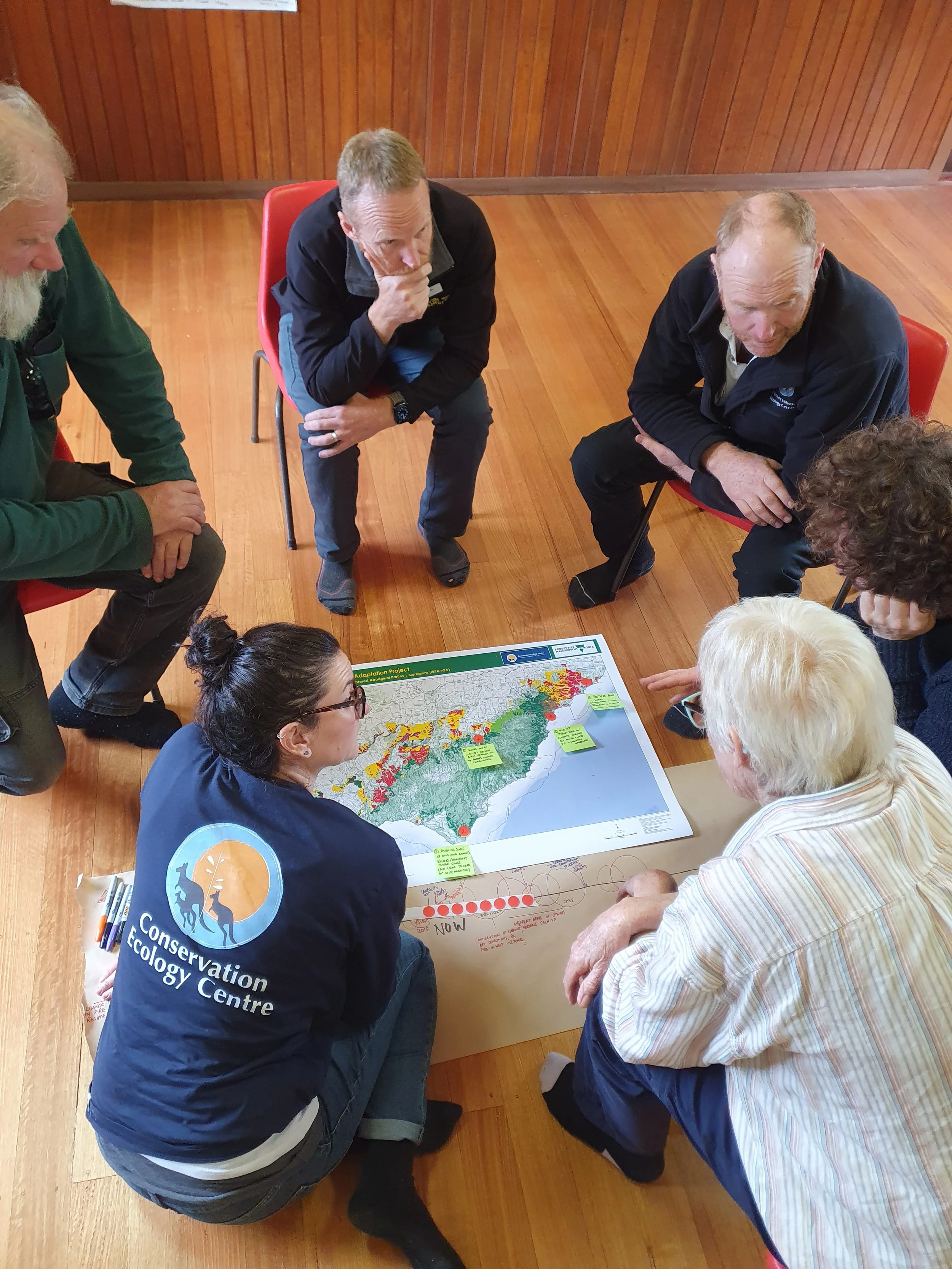
In 2025, we set out to develop a detailed Adaptation Pathway that could guide long-term planning for the Otways foothill forests - incorporating Traditional Owner obligations, new ecological research, expert opinion, and insights from stakeholder engagement into a structured set of options for future management.
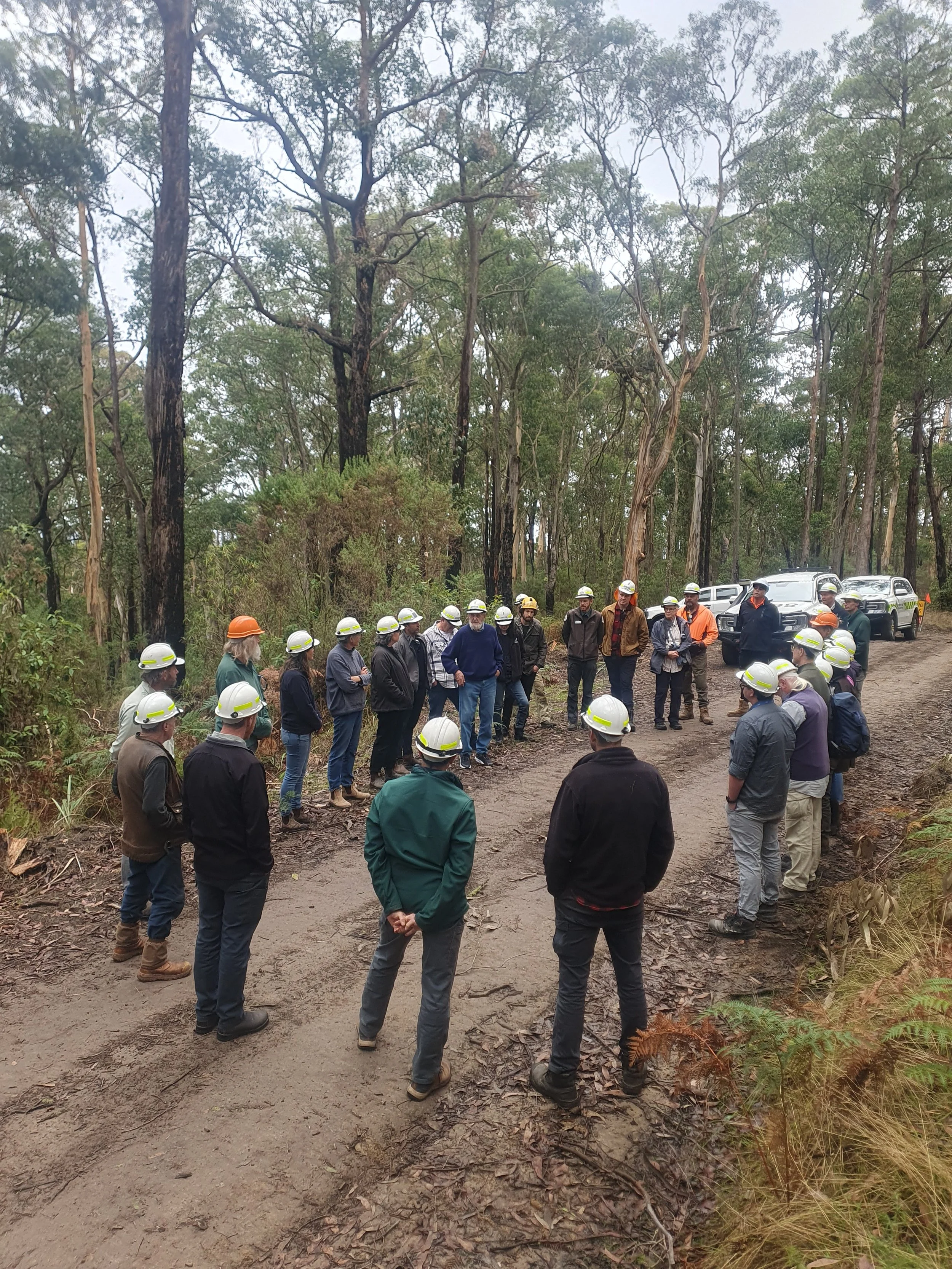
From a CEC perspective, this involved facilitating stakeholder workshops, preparing a climate vulnerability assessment, undertaking on-ground monitoring to generate relevant data, and many meetings with interested stakeholders.
We learned that Adaptation Pathways is a powerful, dynamic tool for navigating the high levels of uncertainty in complex forest systems. But generating the pathway is only half the battle; the collective journey of working together is crucial. We found that technical knowledge must be coupled with trust, transparency, and deep partnerships with Traditional Owners and local communities to truly provide the mandate for action.
A significant outcome of the Resilient Forests project has been its contribution to the development of an emerging Community of Practice on climate adaptation planning, with a particular focus on the use of Adaptation Pathways as a framework for decision-making in Natural Resource Management more broadly.
Now, we are charting a path from planning to practice. In 2026, our priority is the Centre Road Healthy Country Trial near Forrest. This site will be our comprehensive, place-based model, co-designed with Eastern Maar Aboriginal Corporation (EMAC), showing exactly how we can embed biocultural management and Adaptation Pathways on the ground.
Systems change takes long-term investment in relationships and continued learning. In 2026, we will continue to build on and share the lessons learned so far with local and broader audiences. This will involve ongoing partnerships with local communities, Eastern Maar Aboriginal Corporation (EMAC), researchers from the University of Melbourne, the Department of Energy, Environment and Climate Change (DEECA).