A different way of burning – does ‘less fire, more often’ help keep foothill forests healthy and communities safe?
A diversity of fire regimes, including low-intensity mosaic burning, is increasing plant diversity in the foothill forests of the Otways, according to research by the University of Melbourne.
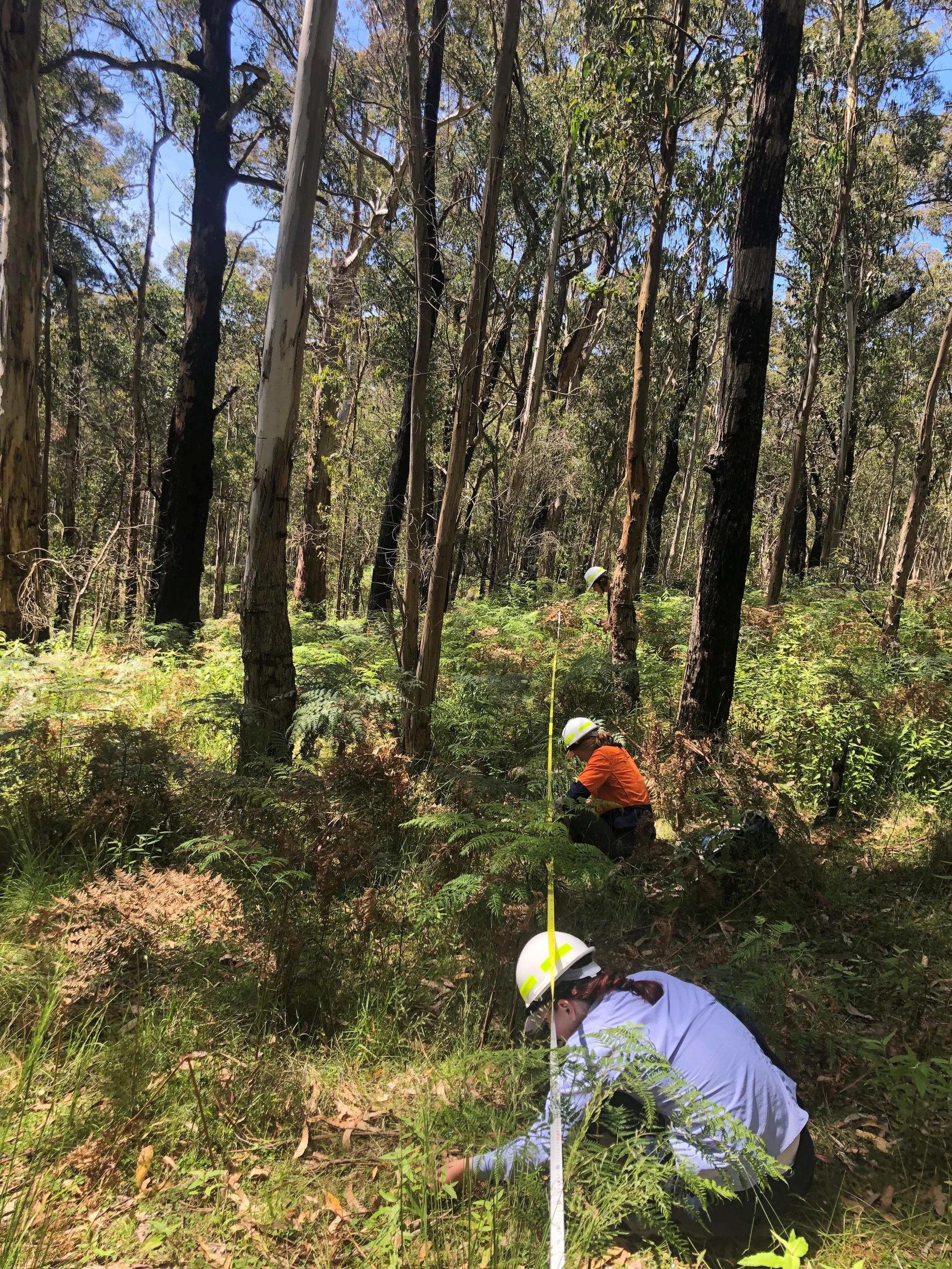
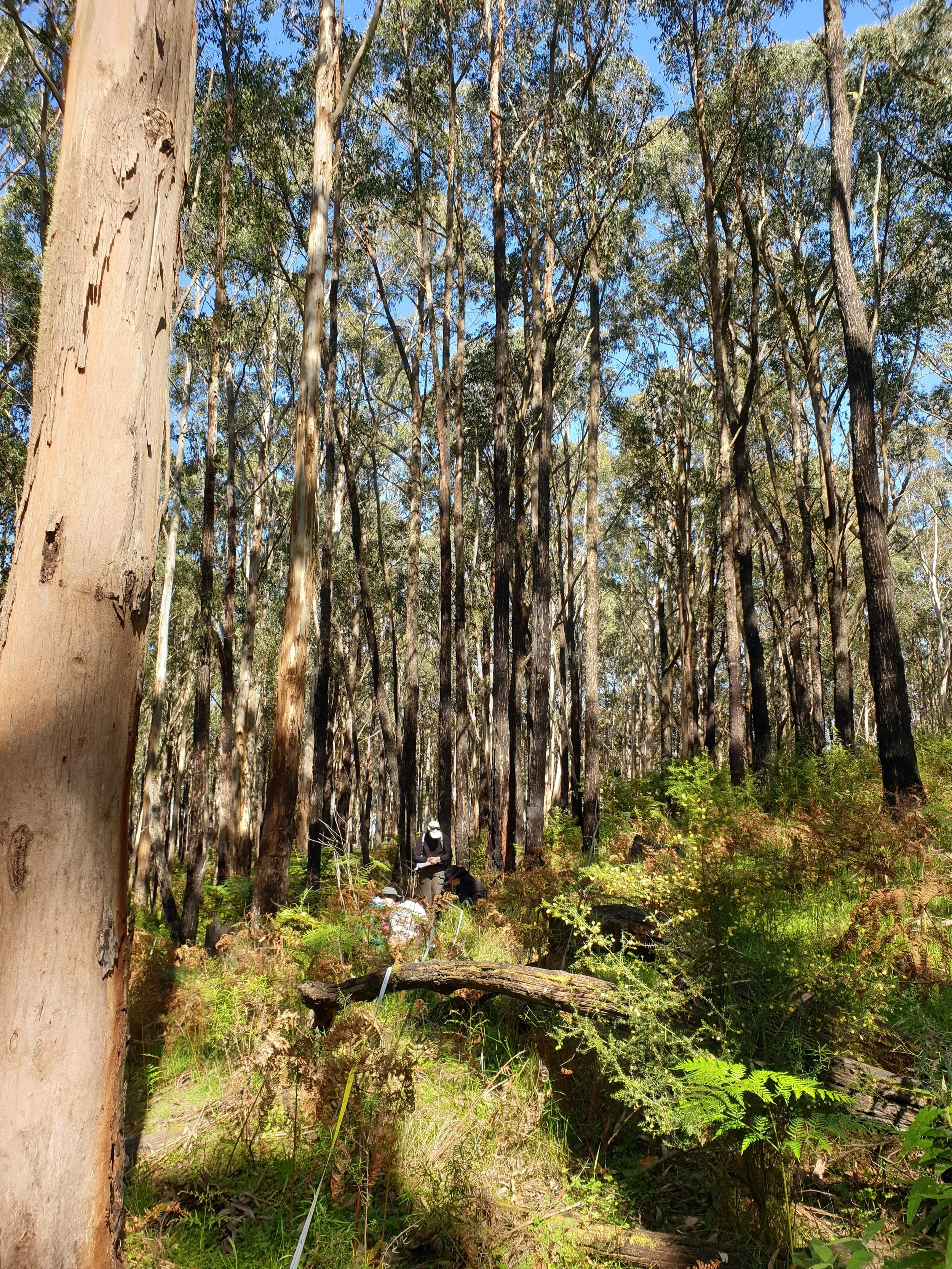
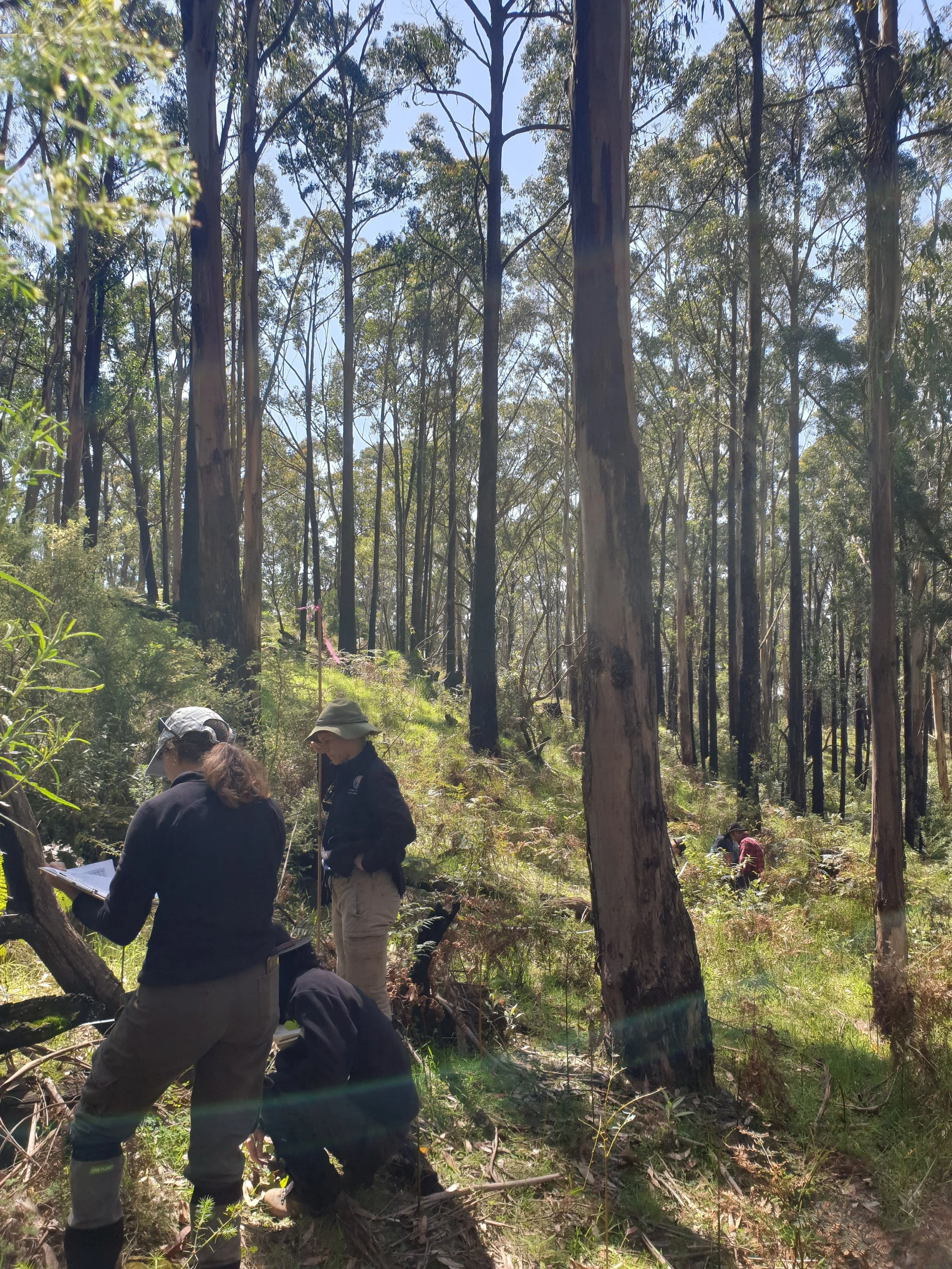
In the foothill forests west of Lorne, researchers from the University of Melbourne and Conservation Ecology Centre are on their hands and knees searching the grassy undergrowth for Pale Sundew (Drosera peltata) and Stinking Pennywort (Hydrocotyle laxiflora).
Across the road, their colleagues wander around head-height Musk Daisy bushes (Olearia argophylla) and push through thick patches of forest wire-grass (Tetrarrhena juncea).
“The differences in vegetation here are in part the result of different fire regimes,” explains University of Melbourne researcher Dr Sarah McColl-Gausden. “One part of the forest is open and grassy, another is dense and shrubby. But are both healthy? And will they carry fire differently?”
These are the questions behind the Northern Ramps study, underway in the foothill forests on the northern side of the Otway Range – where farmland gives way to forest, and an area which has been identified as a wildfire risk corridor for large tracts of wet forest and rainforest, as well as several large coastal communities.
Researchers are comparing long-unburnt forest, with sites burnt twice in 10 years (2011 and 2022), and twice in 5 years (2019 and 2022), testing how low-intensity fire regimes affect fire risk, and what changes this brings to plant community diversity and structure.
“The plant communities are different between the different treatments, and the diversity of fire regimes has also increased the number of plant species across this landscape,” says Sarah.
“In fact, we are seeing diversity at several scales – at a landscape scale, between the sites burned in different years, but also within each site, where the patchy nature of the low-intensity burns also created greater diversity between the burnt and unburnt patches.”
The more frequent treatment uses low-intensity fire that burns in a patchwork, leaving pockets of unburnt vegetation within the burnt area. This mosaic pattern is thought to support greater diversity, and the early results back that up: more frequent, low-intensity fire is creating a diversity of habitats that support different suites of species.
The number of species recorded was highest at the most frequently burnt sites – a common finding due to early successional species. These sites also had almost twice as many unique species not found in the other treatments: 15, compared to eight in both the 10-year and long-unburnt sites.
Variation between sites of the same treatment was also higher in the frequently burnt and long-unburnt sites, though for different reasons. In the 5-year sites, this is most likely driven by the patchiness of the low-intensity burns; in the long-unburnt sites, it's more likely to reflect divergence over time, as each site settles into its own trajectory in the absence of fire.
In the next phase of the Northern Ramps study, changes in forest structure and fuel will continue to be tracked under these different fire regimes. The work is building a body of evidence that land managers can draw on when weighing up mosaic burning as part of the region's fire management approach, balancing biodiversity outcomes against fuel management.
Importantly, the study design allows for long-term tracking, offering opportunities to revisit plots at decadal scales and to expand monitoring to fauna and adjacent vegetation types over time.
The work is being presented at the Otways Ecological Research Forum in Colac on Tuesday 25 August 2026.
For interviews or more information contact: Toni Stevens, Conservation Ecology Centre on 0401763130 or toni@conservationeoclogycentre.org.