
Foxes and cats in the Carlisle
Otways Landscape Programs > Heathlands > Foxes and cats in the Carlisle
Project Overview
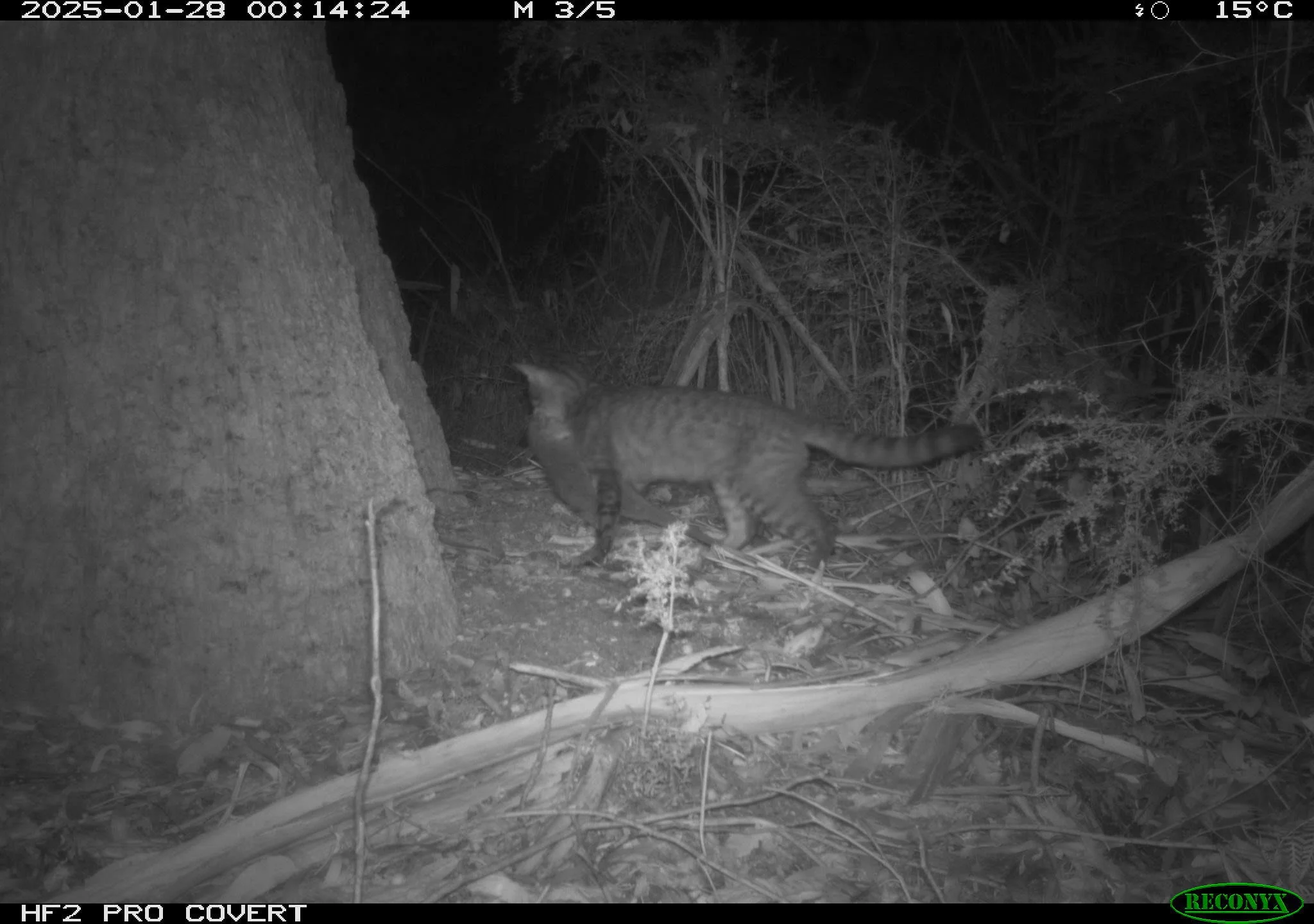
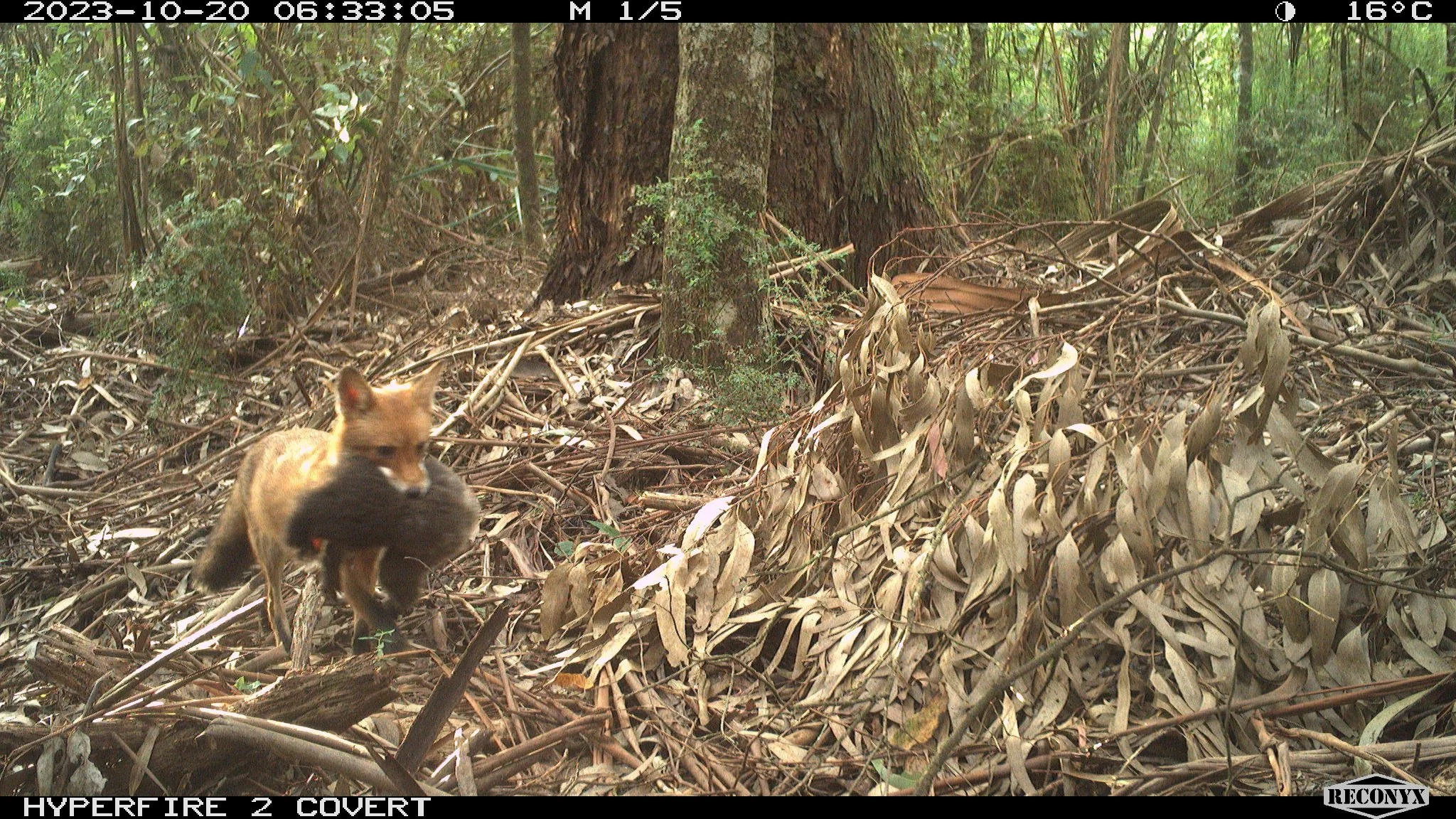
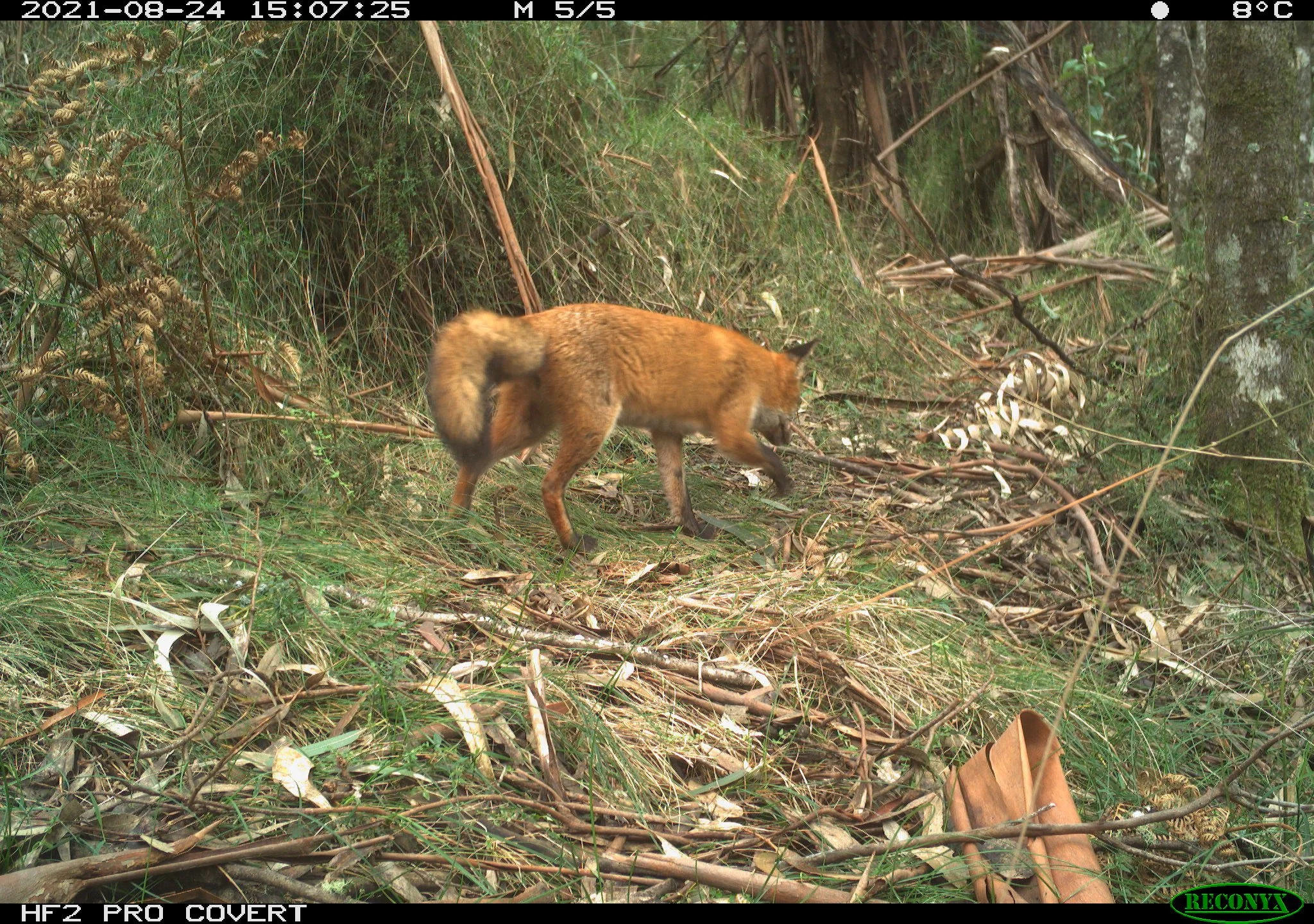
The devastating impact of foxes and cats on Australia’s native wildlife is well documented and the situation is no different in the Otways where our most vulnerable small mammals are at risk from these feral predators.
Feral cats and foxes are responsible for the death of 2.6 billion native Australian animals each year.
In addition to the direct threat to small mammals posed by these introduced predators, a growing body of evidence from around Australia suggests fire may increase the vulnerability of native mammals to predation by foxes and feral cats after fire, by removing the dense understory vegetation that provides cover for small mammals and making it easier for predators to move around.
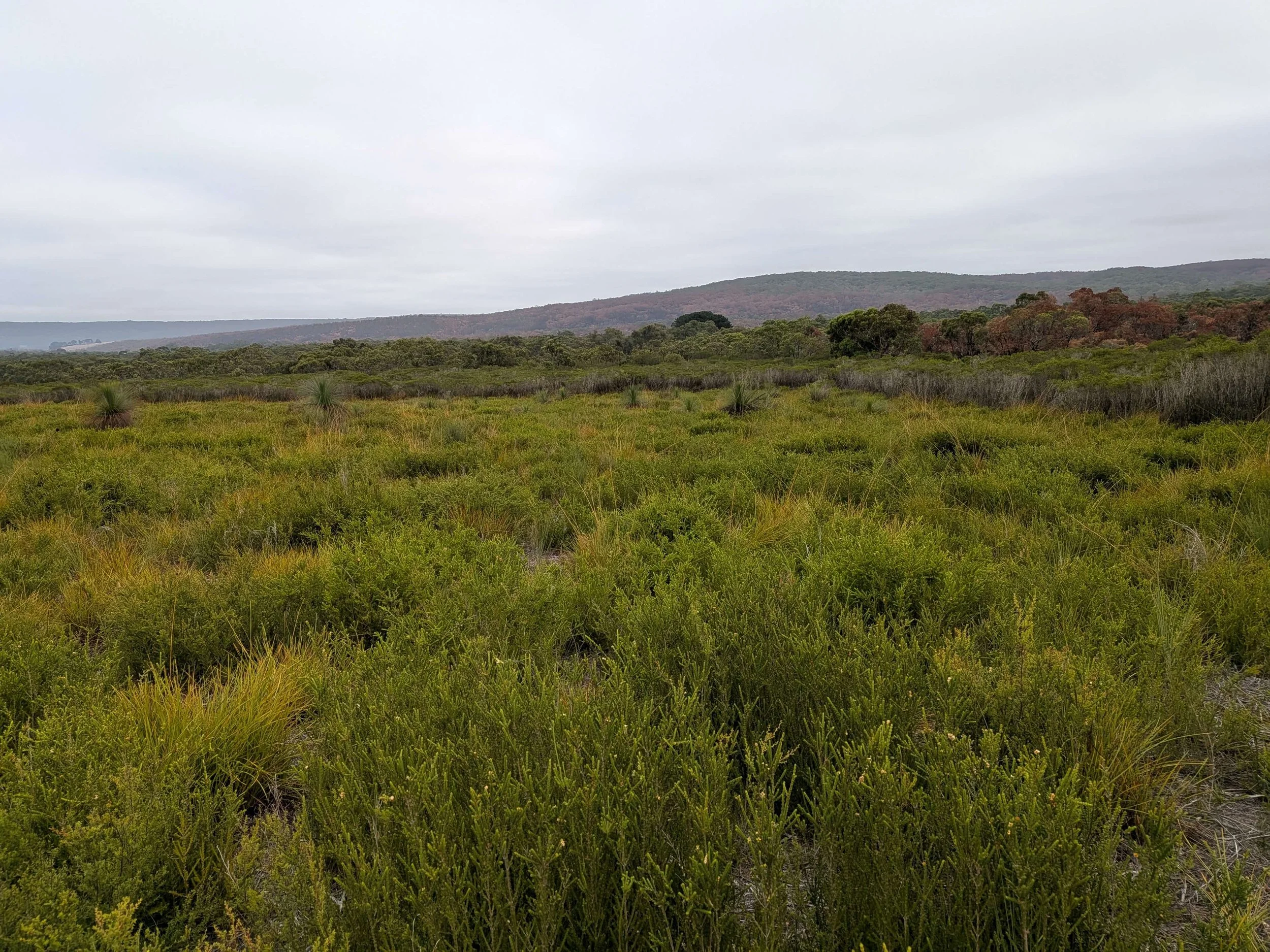
In 2018/19 the Conservation Ecology Centre was looking for appropriate study sites to investigate the impact of prescribed burns on critical weight range mammals (CWR) in the Otways. Upon scoping, only a single site in the region supported populations of CWR adequate for a rigorous study. In the heathy woodlands of the Carlisle region we recorded strong populations of Long-nosed potoroos and Southern-brown bandicoots.
The relationship between fire, feral cats, and foxes in the Carlisle Heath was investigated by the CEC as a part of the Wild Otways Initiative. And this work is being further progressed in response to the 2026 Otways Complex fires.
In 2022 camera grids and DNA analysis of scats were used to estimate predator densities in the Carlisle and Anglesea heathlands. Fox density in Carlisle was almost twice that of Anglesea, despite Carlisle having no history of long-term fox control. Feral cat density showed the opposite pattern, with notably higher numbers in Anglesea than in Carlisle. Both cat density estimates were lower than previous findings from the wet forests of the Otways.
GPS collars were deployed on foxes, feral cats to track movement before, during, and after planned burns, alongside 32 collared Long-nosed Potoroos. The potoroos were found to maintain small home ranges even after fire and continued using burnt areas for food but became vulnerable to predation in the following weeks. Foxes and feral cats, by contrast, ranged widely, used tracks and waterways to move through the landscape, and spent more time in recently burnt areas, contributing significantly to native fauna mortality.
Three management interventions were trialled: modifying planned burns to create patchier, mosaic fire scars that retained unburnt refuge vegetation for small mammals to shelter in; integrated predator control (bating and shooting) to reduce predation pressure around burn operations; and artificial refuge tunnels.
The work showed minimal use of the refuges by threatened species but produced practical guidelines for land managers on predator control and burn lighting techniques.
In response to the 2026 bushfires in the Carlisle Heath, we’ve been working with Parks Victoria and the University of Melbourne to deploy fox and cat detection cameras, to better understand the response of predators and prey to a major fire event.
News



Partners & Supporters
This work has been funded by the Department of Energy, Environment and Climate Action (DEECA). It is being led by Eastern Maar Aboriginal Corporation (EMAC) in partnership with the Conservation Ecology Centre and the University of Melbourne.