Developing a State-and-Transition Model for Otway Foothill Forests
Otways Landscape Programs > Forests & Woodlands > Developing a State-and-Transition Model for Otway Foothill Forests
Project Overview
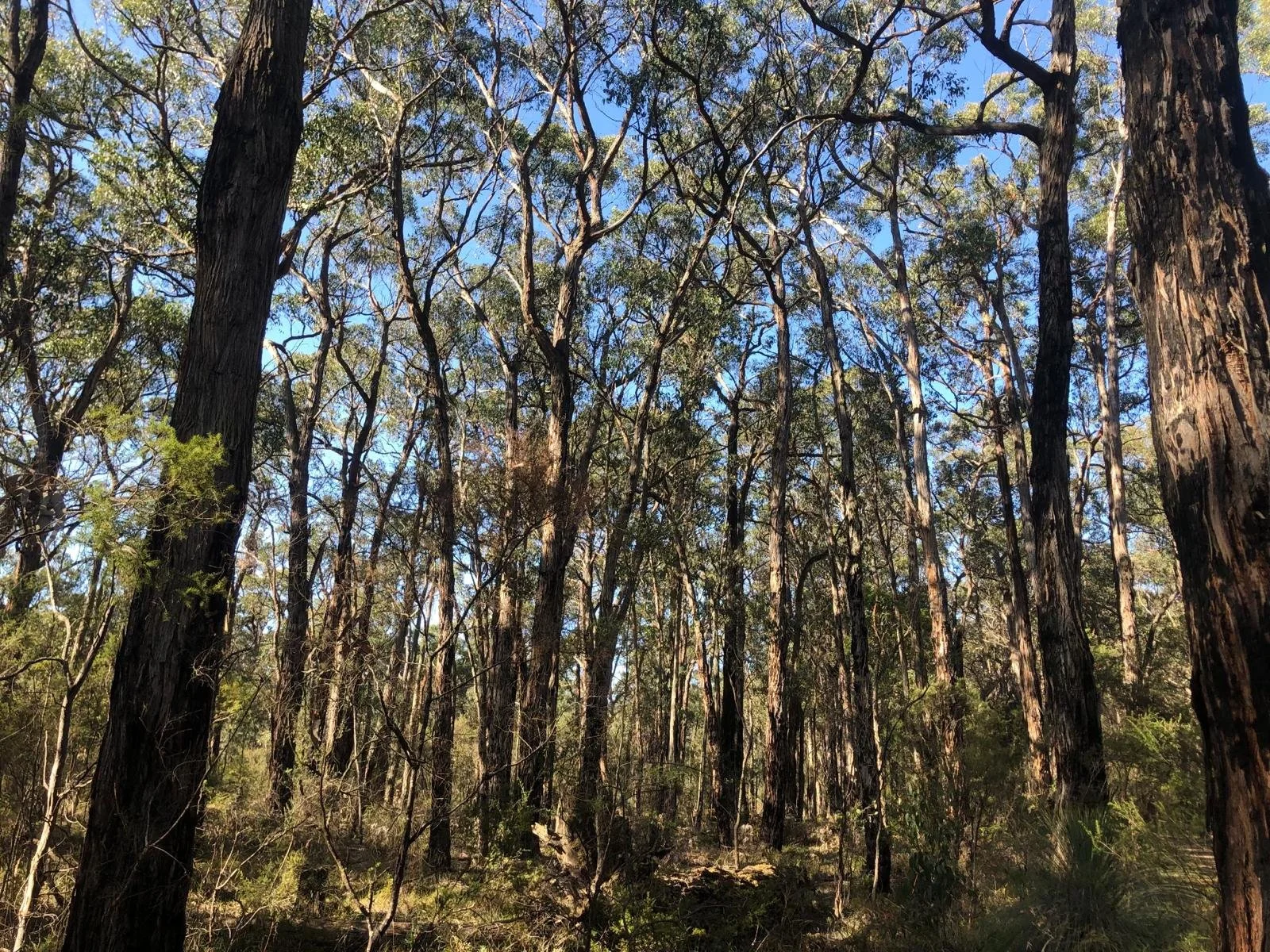
The CEC is currently working with EMAC and The University of Melbourne on an Australian Research Council (ARC) funded research project to better understand the current state of the lowland foothills forests in the Otways, and what transitions or disturbances contributed to this.
The resulting State and Transition Models (STMs) will be used to:
identify and define different condition states across the landscape, in relation to both biodiversity and cultural values;
explore how states can transition over time in response to different disturbance and management drivers, including identification of uncertainty;
underpin the framing of landscape-scale experimental approaches to resolve any critical uncertainty impeding fire management decisions; and
develop plausible landscape scenarios for different future configurations of condition states, and use existing quantitative fire simulation tools to explore how management may influence wildfire dynamics, and the corresponding risks to life, property, environmental and cultural values.
The models are being developed in collaboration with local land managers, ecologists and Traditional Custodians utilising pre-existing programs like DEECA’s Fuel Management Program in the Northern Ramps to inform and validate the models.
Videos
A Biocultural State and Transition Model for Lowland Forests
Otways Ecological Research Forum 2026
Dr. Megan Good, The University of Melbourne
Biocultural Landscapes
Otways Ecological Research Forum 2025
Dr. Jack Pascoe, University of Melbourne and Conservation Ecology Centre
Partners & Supporters
This project is being led by the University of Melbourne, with funding from the Australian Research Council.